The Triangle Factory Fire Project

Nothing is quite as engaging as live theatre, even bad live theatre has something about it that grabs you in a way film cannot. It is immediate and real- no need for artificial 3D,1.Triangle.showcard-300x300 (1)

yet it allows  the imagination to play a part. Friday, I had the chance to see The Triangle Factory Fire Project. The story is true and horrifying. In 1911, a fire broke out on the 8th and 9th floors of The Triangle Factory in New York where immigrant and poor women laboured over sewing machines to produce shirtwaists, the latest fashion craze. They were paid a pittance and could be fired at the whim of the managers.

On March 25, 1911, 146 women died because of the fire. Some of them perished in the flames, others leaped to their deaths on the sidewalk below. They had been trapped. The elevator didn’t work, and one door to the staircases was locked. In the ensuing panic, some of the women didn’t get to the second door to escape.


Remembering-the-Triangle-Shirtwaist-Fire_1_1
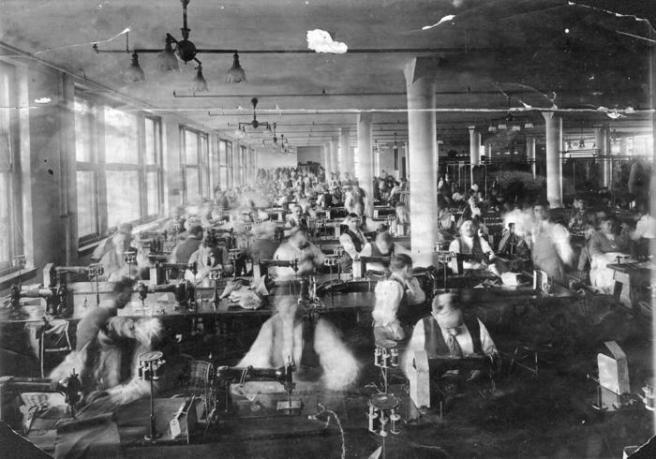
This picture shows how many women were crowded into a sewing floor…

The Walterdale production of the The Triangle Factory Fire Project, a play first produced off-Broadway, was professional in every way and the theatre itself  provides an intimate venue for its presentation. In act one, it introduces the facts of the fire through headlines and characters announcing them. Then the scene switches to a re-enactment of the fire which captures the chaos and terror of the 27 moments of the blaze.

Act Two features the trial of Max Blanck and Issac Harris, factory owners. It is 1911, women can’t vote, have few rights, and the jury is all male. The defense lawyer is arrogant; he sneers as he bullies and questions the female witnesses and the fire chief. Blanck and Harris are acquitted, even though they had ordered one of two doors locked so women had to leave by a single route and their purses could be searched for stolen shirtwaists.

Three years after the fire, on March 11, 1914, twenty-three individual civil suits against the owner of the Asch Building, where the Triangle Factory was located,  were settled. The average recovery was $75 per life lost. The owner received $475/per woman from insurance.

The Triangle Factory Fire Project brings this dramatic story to life. The 146 lost lives did energize the suffragette and labour movements. Women got the vote in 1920 and the tragic deaths of the Triangle women had aided in the struggle to achieve the franchise. The strengthening unions also made advances in safety guarantees for workers and helped increase their pay because of this evil and preventable tragedy.

Live theatre, whether is be community theatre or a production by a professional group gives you great value for your entertainment dollar.

ruins
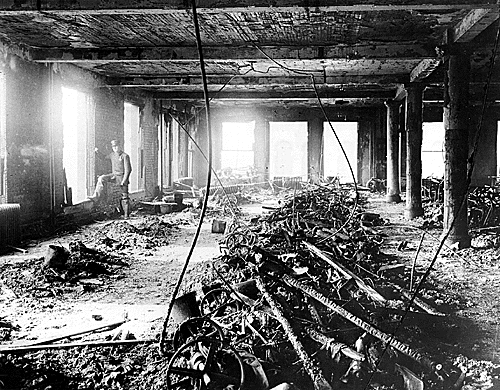
The ruins after the fire had burned itself out.

T

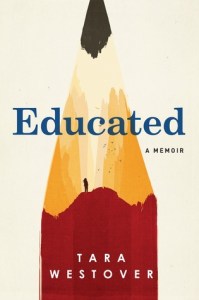
Educated by Tara Westover

Educated is Tara Westover`s memoir of family control and ignorance and an awakening as she seeks answers and knowledge. This was a book recommended to me by a friend and neither the title or the recommendation suggested the kind of horror and abuse that Tara Westover and her family suffered.

35133922

The Westovers are a Mormon family whose fanatic father has re-tooled the religion into his private cult. He selects snippets from the Bible or the Book of Mormon and dictates to his family how they will act and what contact with the outside world they can make. His twisted beliefs come from feelings of deep paranoia. He is sure that the government, educational institutions, and health care are in a conspiracy to harm him and his family.

In her memoir, Tara Westover, tries to patch together a childhood of fear and abuse and fierce love. Her memories are confused and like all of us, some recollections might have planted themselves as memories because other family members have recounted them so often. Nonetheless, her life story is compelling and appalling.

The rules her father makes have no logic. Dairy products are taboo, a year`s supply of food they preserve themselves, must be stockpiled so when some government Armageddon descends, they can hide in the Idaho hills and survive until the crisis passes. To this end, Tara`s father insists his wife become a midwife and healer. It makes them more self-reliant. Tara is her mother`s assistant when she isn`t helping with the family scrap business. Her father and brothers work at this except when they are trucking. The work is dangerous, hard, and performed without concern for even minimal safety standards.

Horrific injuries have to be endured and her mother struggles to provide healing. Burns, brain injuries, deep wounds seldom receive medical attention and if they do, the patient is taken home long before a proper recovery is realized.

From this chaotic, illogical environment, Tara Westover, a young woman with no formal schooling, no birth certificate, and a strange mixture of fears and beliefs, studies for and gets the marks on the ACT exam which assesses students on high school curriculum and their readiness for college. Tara is admitted to Brigham Young University of the strength of her results; she has never heard of the Holocaust, of the American Civil Rights Movement, yet somehow her hard work and quick brain make up for these omissions. She is invited to Harvard and to Cambridge in England.

Tara Westover`s story makes compelling reading. You are drawn along with the kind of urgency that a thriller or horror novel might demand. The best part of this memoir, is that there is a resolution of sorts and that against all odds, Tara has prevailed.

October- Library Month in Canada

Years and years ago, my mother would take us to the library on our weekly visits to town. We lived on a farm and got into town on a Saturday.

The library was in the old Prospect School House which had been purchased in 1951 and in 1953 opened for the express purpose of housing the library. No heating or insulation. Volunteers handed out books in gloved hands and the lack of windows, insulation, etc. were eventually looked after by money raised from bake sales and local fund raising.

Kudos to those long gone volunteers. The building may have been dingy, stale, and dark but to me it was magic. With your library card, you could wander up and down the narrow alleys between the high shelves and find a treasure to read. The Black Stallion Series, The Black Panther Series, Tarzan and John Carter of Mars by Edgar Rice Burroughs. The Mark of Zorro and so  many others that I can’t remember. This was an era without tv, one where electricity had only recently reached our farm, and the internet wasn’t even a fantasy. There was no need; the books were there and free.

Even if money had been no object, there was no bookstore in my small town. I can’t remember when I first visited a retail book shop; for a while I did buy a lot of books. When I realized I wasn’t re-reading them, I depended more and more on our local library, now part of a library system which affords me more and more choices.

Libraries have evolved. They provide many services other than the magic I found. They still provide books, magazines, e-books, newspapers (mostly on line). There is the use of computers for no charge, exam invigilation, a quiet place to study or read, a meeting place, a supplier of programs for toddlers, kids, teens, adults and seniors; all of these services are free or reasonably priced. The library is a community treasure.

Today funding comes from provincial grants, our local town council, and the municipality. Although, they are as generous as they can be, the library can always use funds. Many things are done to close the gap between the funding that keeps the library services intact (barely) and the fund-raising that tries to make budgeting slightly easier.

facebook_1538447545057

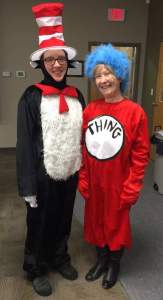
This picture is typical of library supporters. They dress up, they apply for local grants, they try different schemes to fund raise.

Libraries are one of our most important resources and Canadian Library Month recognizes this.

Visit your local library! You’ll be surprised at what is on offer.

Canadian Thanksgiving

Indigenous People always observed the coming of fall with feasts to celebrate the harvest. Sir Martin Frobisher with his crew marked their safe arrival in Newfoundland with a Thanksgiving in 1587. On the menu? Salt Beef, biscuits, and mushy peas. That’s a long way from the traditional turkey.

In 1606, Samuel de Champlain initiated a series of rotating feasts in an attempt to stave off scurvy. The first such feast was November 14 in Port Royal and is a Thanksgiving as well. This is 17 years prior to the American version with the Pilgrims. Canada led the way.

1957 was the year that Canadian Thanksgiving was made an annual observance on the second Monday of each October.

With Thanksgiving coming up in a week, I reflected on all I have to be grateful for. It would take way more than a little blog post like this but first and always on my list is family, and friends. This year my son is making the celebratory meal for the family. He is divorced but stresses family to his kids; the meal will be great and I’m going to bring dessert. That isn’t really what it’s about. It’s to get together and have a family event. We’ll play a password game that was my husband’s mother’s favourite. We’ll play some card games and we’ll visit. There will be three dogs as well as the humans and they’ll get their share of the special day.

Before that I’m stopping to think about friends as  well. There is nothing like the shared laughter, the shoulder to cry on, the sympathetic response to a rant. A common interest leads to friends. I met very good friends through a local writing group and now we are much more than that interest in writing. Friends enjoy your quirky humour and put up with your flaws. Thank you, friends.

On a much wider scale, I am so grateful to live in Canada. With all its faults, I enjoy freedoms, self-expression, religious choice, and opportunities afforded by no other country. I live, by Canadian standards, a modest life. By world standards, I am rich beyond compare. My son and daughter have university educations. My grandchildren will have that chance, too, if that is what they want.

I have so much to be thankful for and I am.


October Arrives

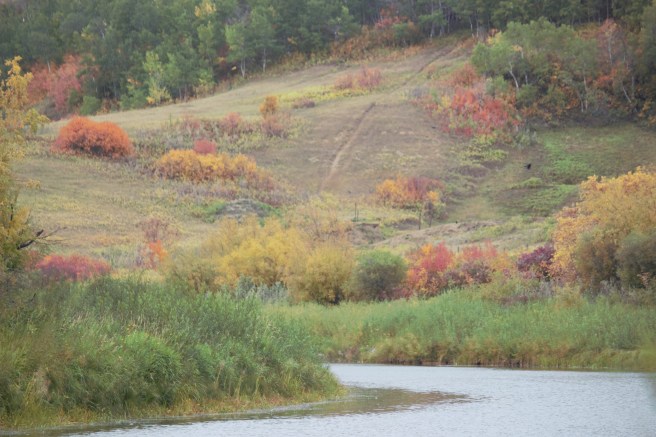
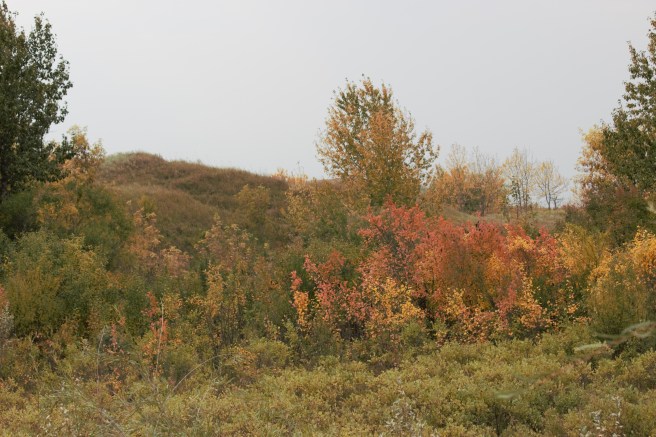
Today is the first day of October. It is the month often associated with fall but this year, fall arrived in September. We’ve already had snow and hard frosts.IMG_3748 (2).jpg

I took this picture of the Battle River Valley when I thought the leaves were at their most colourful. Now there are stands of aspen which have lost their leaves. When you drive through the countryside, the colours are there but they are not as spectacular as they were.

This morning on my dog walk, the geese filled the air. They were flying south east from where they had fed earlier. Their honking and calling reverberated. It is eerie to hear and humbling to think how they cooperate in the flight and how they are getting ready for their migration south.

In our yard, all kinds of birds have come to gorge at the feeder. They are battling the colder temperatures and getting ready for winter. There have been chick-a-dees, sparrows, two kinds of native sparrows, nuthatches, warblers, juncos, and a small downy woodpecker. The blue jays are the bold birds that screech at my husband to bring out the peanuts.

We’re still on daylight saving time and sunrise is getting later and later. The twilight lingers but not for long. The shadows are somehow thinner and more slanted. The wind bears traces of ice.

October days can be bright and crisp. The water in ponds has a cobalt blue not seen in other months. The clouds no longer gather and expand at the horizon but instead move in carrying the promise of precipitation. The land settles in, getting ready for the coming winter.

Welcome, October. I hope for sunny autumn days that carry a hint of the summer gone by.

IMG_3766 (2).jpg


We Are Not Ourselves – Matthew Thomas

From this end of my life (thank you, Stephen King), We Are Not Ourselves, resonated. Everyone, immigrant, young wife, new husband, three generations has high hopes and works hard, and yet fate intervenes.

we-are-not-ourselves-9781476756677_hr

Eileen Tumulty looks after her drinking Irish parents, who are not just sampling the odd cocktail. They are full-on alcoholic and as dysfunctional as that implies. At last, Eileen meets Ed Leary, a research scientist. He seems like her dream man and the one who can provide her with a cosmopolitan existence she craves. Eileen wants better for herself, socially, economically, intellectually. Ed Leary could make it happen, yet once they are married he is obstinate in his refusal to seek higher-profile, better paid jobs. No matter how hard she tries, encouraging or demanding, Ed stands firm and continues in his research position, although he could be promoted or could seek a place at a more prestigious college.

Eileen takes matters into her own hands and searches out the house that might take them where she wants to be; out of her immigrant neighbourhood and into a more socially prominent area. Ed is still unhappy about a move, and Connell, their son, who has his own issues at school, agrees to move to keep his mother happy. It’s really more than they can afford. The move seems doomed.

Ed refuses to let professionals renovate and repair their new house for it is, indeed, a fixer-upper, needing a lot of attention. The new neighbours aren’t running to knock on the door and make their acquaintance. Eileen is a nurse and successful in her own career but she always wonders if she’d make a better lawyer or maybe a politician. Ed gets more stubborn and more eccentric.

The new house doesn’t give Eileen what she’s always wanted – a better life. More and darker problems arise and the novel examines how unfulfilled dreams and love intersect. How fate laughs at our expectations and plans, throwing them into disarray just for the fun of it.

Eileen has scant fun, Ed has less, and their son Connell struggles with adolescence and a family falling apart. Although, this is a bleak story in some ways, it was well worth the read and kept me totally engaged. The only disappointment was the ending but no spoilers, I’ll let you decide for yourself.

A Therapeutic Walk in the Snow

I can’t lie. When the snow fell and then accumulated yesterday, I was bummed. After all, the calendar said that yesterday was the last day of summer. Since August 25th, it’s mostly been cool and dreary. I did feel sorry for myself…

And then, came the news out of Ottawa and Gatineau. Not one but two tornadoes, the first an EF-2 strength, with winds to 220 km/h, and then a second an EF-3, with winds to 265 km/h struck. Pictures and video are terrifying and show mass devastation- houses, buildings, trees, cars, reduced to sticks and twisted metal. Some areas are unrecognizable. If there is one silver lining to this storm cloud, no one died, as far as can be determined.

Here, on the prairies, the snow is a lot more than an inconvenience and something for me to whine about. As farmers look across fields with crops, swaths, and a year’s work, they wonder if anything can be salvaged. Grades of the grain decrease as each snowy, wet day passes and the second danger is that crops in swaths will begin to sprout. Even with perfect, unseasonably, warm weather, it is going to take weeks for grain to dry enough to harvest. A slower kind of devastation.

Dogs don’t really understand weather and so this morning, snow was no excuse, we headed out on our normal route.

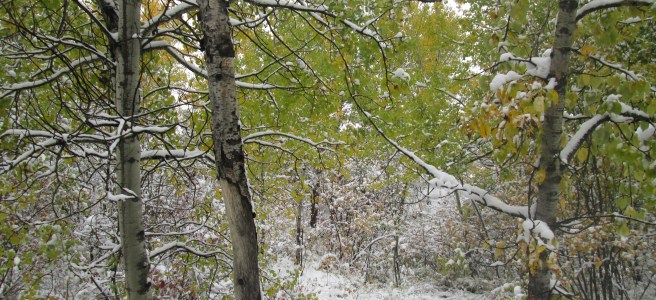
The snow on the trees is pretty and after a while, I felt better about the weather. It was chilly but tomorrow is supposed to warm up. As we walked along, little sparrows darted among the branches, twittering to one another. My Scruffy, who has no teeth and weighs 10 pounds, charged a timid, Border Collie-cross, and chased her. Tazzie, the Jack Russell, made several new friends, humans, of course.

When we were close to home, a young fellow, ten or eleven years old met us.

“Can I pet your dogs?”

Of course, Taz was delighted to be introduced to a new friend and then the boy said, “How do you like your weekend off from school?”

Ha! I must have acted as a supply teacher for his class one day. I replied that I wasn’t happy with the snow.

“I know. Yesterday we went to Lloyd,” he said. “And Mom bought me these mitts and toque at Walmart.”

Then he said, “Enjoy your weekend.”

Perspective is everything. A simple walk through the trees, a meeting with a young boy, and an adventure with a Border Collie. The air is fresh, I wasn’t cold and I’m pretty sure breathing it, stimulates the release of endorphins. I’m not bummed now. And I can appreciate it’s just another phase of Alberta weather.

I do hope there is a stretch of mild temperatures so crops can be harvested.

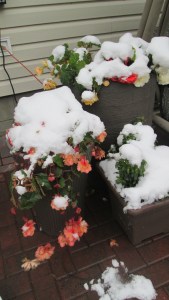
IMG_2585 Do you think my begonias are going to survive? 😀

 

The Aga Khan Garden (UofA Botanical Gardens)

Alberta is experiencing late fall weather early with snow, rain, and overcast skies. We could have changed our plan to visit the new addition to the University of Alberta Botanical Gardens, the Aga Khan Garden, but despite the 2 degree Celcius temperature, we didn’t. Two native Albertans and a transplanted Vancouverite are not that easily deterred.

The chill gave us the advantage of being three among very few other visitors. There was a bus of school kids and then it was like we had a private viewing. The Aga Khan Garden is a spectacular 4.8 hectares developed for Edmonton’s region and climate, inspired by Mughal traditions, and made possible by the Aga Khan’s $25 million dollar gift. The Garden has been 10 years in creation and is now open to the public. It is meant as a meeting place; a place to connect with nature, and other humans; it is a symbol of hope, peace and unity.

IMG_2279
This gives you an idea of the size of the Garden, the people to the right were removing dahlias that were mildewing in the damp of the recent rain and snow. Tulips are being planted in the bed for spring.

We thought that the main feature would be the Aga Khan Garden but were surprised at the other elements. First we walked by the Wedding Pavilion, and toward the Patrick Seymour Alpine Garden. At this time of the year, it was a stroll through the woods with squirrels, blue jays and robins. Ponds held huge Canada geese who were quite unperturbed by us going by.

Farther along, we entered the Indigenous Garden which is the only one of its kind in Canada. It features the plants that Indigenous people used for medicine, domestic purposes, and of course, ornamentation. It was too bad that most of the plants were heading to dormancy.

The Kurimoto Japanese Garden is groomed, formal (to me), and designed in the kaiyou (walking style.) There are ornaments, pagodas, and water features. The Garden is named after Dr. Yuichi Kurimoto, the first Japanese national to graduate from the University of Alberta Faculty of Arts in 1930.

After walking through the Japanese Garden, we were excited to come to the Indoor Show Rooms. We chose the Tropical and Bufferfly Room first because we needed to warm up. There were beautiful blooms and as the name says, several types of butterflies fluttering about.

The other two rooms were interesting but not as eye catching. The Arid room held, of course, cacti of many varieties. The Temperate Room had plants we were more familiar with and fewer blooms.

We wanted to have a cup of coffee, and we could have, but hardy as we Albertans are, we said, no, to a cuppa on the patio of the Outdoor Cafe. The heater was on in the car on the drive back.

The day and weather weren’t ideal, but good company, proper jackets, and footwear made it fun. I’m a little embarrassed that although I live so close, I haven’t been to these gardens before. I’ll be back when my “hardiness” is a non-factor and the gardens are in their full glory.

Something Else to Worry About

I know that my blog is called the mild side and I meant to write mellow, worth-a-little chuckle pieces. But I can’t control my urges to occasionally rant- this is post 10 so I’m going to rant.

At a certain age, your body makes changes so it’s more comfortable; changes you might not be as comfortable with. I not talking about wrinkles, sagging boobs, loose bellies, fallen asses. I am talking, people, about feet. Yes, feet. Now women are putting themselves through nasty surgeries because when you get older, even your feet get too ugly for aesthetically sensitive people to be exposed to. What kind of disgusting conditions can be corrected with cosmetic surgery for the feet?

Feet get knobbly. Bunions need removal to slim feet, toes can be lengthened or shortened, lumps and bumps can be shaved, bulging veins stripped or scrawny feet plumped with filler.  Women might choose some of these procedures to lose a shoe size and get that more glamerous size 8.

shoes
Ah- the ideal. Is there any wonder women’s feet show their age?

All surgeries come with some risk. It’s ludicrous to think that women are made to feel so self-conscious about their feet that they won’t wear sandals or go swimming. Real physical problems that cause pain, make it impossible to find shoes, or interfere with mobility should be corrected; however surgery to have pretty feet is plain crazy and even worse is that another impossible “beauty” standard is being set.

What is next? What body part hasn’t been tweaked, modified or totally re-done? I thought when the Chinese women no longer had to bind their feet…what a liberation. And here we are in 2018 headed down the same senseless path.

And prepare yourselves- I’m including a horrifying picture, unretouched, of the feet of an old lady. They’re actually great feet. They let me walk miles if I want. They let me run (try to run- Ha) with my grandchildren; they let me walk my dogs for three kilometers a day, and dance the night away if my husband’s gimpy knee ever recovers. No cosmetic surgery for me.

The information for this rant came from The Edmonton Journal, Monday the September 10. The opinions, of course, are mine.

feet2
In their full glory. They spent the summer in that general purpose sport shoe, the flip-flop. Yikes! Bulging veins. Knobbly toes. Ugh – tendons visible.


It Shouldn’t Be That Hard

Every year, kids go back to school  in September and every year, the dietitian/nutritionist guest appears on morning tv to help moms and dads with the onerous task of packing lunches for kids. And to create even more angst they turn it into a search for the new super foods that boost the immune system, that kids, gasp, like and most importantly are convenient. Before anyone clicks this off in disgust, I did work full-time and I did pack school lunches; that is, I packed them until the special orders got too “special.” The kind where ‘I want mustard, no lettuce. I want a little mustard and lettuce and mayo. Don’t cut the meat too thick. I don’t want an apple (insert fruit).’

In one of my many parenting fails, I said, “Fine. You pack your own lunches. THEN you positively will get exactly the food you want.”

My son was in grade two but turned out to be great at making a lunch and does it for his own kids now. My daughter was older and although she didn’t like making her lunch, she liked eating. Her lunches were pretty good, too.

The thing is lunches included a sandwich, a fruit, a snack of some kind (maybe another fruit), a cookie, etc. Nothing fancy. Every Sunday we had a “nice” meal of some kind, a roast beef, a pork roast, a roasted chicken. Then there was a healthy protein for sandwich filling. I confess to allowing little pudding cups and some other packaged “treats.” But the main course was the sandwich.

sandwich
This sandwich is pretty upscale for what hit our school lunches but you get the idea…

Another closely related parenting fail. I sent roasted or fried chicken drumsticks to be eaten with nicely buttered bread. NO. The rule was that sandwiches were eaten first and so my poor kids had to eat the bread before they got to the chicken. I mention this so that no one thinks I’m preaching.


But lunches do not have to have dragon fruit, yogurt squishy tubes, or so many of the prepackaged things kids get. Some of the packaging is a challenge for me to open when a child asks for help. I’m encouraged when I see  some lunches that feature tupperware containers  packed with grapes, cherry tomatoes, or cucumber slices.

fruuit (1)
Just a sample of fruits readily available- nature’s fast food.

I cringe when I see that the choices are gummies, packaged cookies, Lunchables (or their copy-cats.) The “pizza” you make yourself is horrifying. Once the package is opened, a grim, red sauce can be spread over a cracker-like bottom and cheese swept from the factory floor can be sprinkled on top. Kids like them ’cause they’re doing it themselves. Kids like doing stuff. Make them responsible for their own lunches. Let them learn to make a sandwich, wash and apple or some grapes. Let them take milk in a thermos and forget the chocolate choice.